
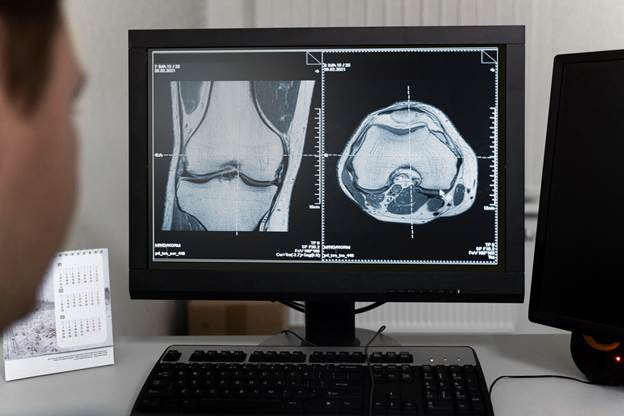
In the world of sports, athletes often face knee injuries. They need the best tools for diagnosis. Enter MRI technology. This guide explains the role and benefits of MRI for knee injuries in athletes. We’ll dive into the reasons why timely diagnosis is key, the advantages of MRI over traditional methods, and more.
1. The Increasing Prevalence of Knee Injuries in Athletes: Why Early Diagnosis Matters
Knee injuries are common among athletes. Reports show that about 200,000 athletes in the U.S. suffer serious knee injuries annually. These can happen during running, jumping, or sudden direction changes. Early detection of these injuries is crucial. Why? Because it means starting treatment faster. This reduces downtime and helps athletes return to sports more quickly. Timely intervention can prevent minor issues from becoming severe problems. So, early diagnosis not only aids in quicker recovery but also ensures athletes can perform at their best without long-term setbacks. That’s why MRI for knee injury is often recommended. By using MRI for knee injuries early, athletes get a clear picture of what’s wrong.
2. Demystifying MRI: A Game-Changer for Knee Injury Diagnosis
Many wonder, what exactly is an MRI? MRI stands for Magnetic Resonance Imaging. It’s a powerful scanner that takes detailed pictures of the inside of your body. It uses magnets and radio waves to capture images without any pain or radiation. This technology is especially useful in sports medicine. Why? Because it gives doctors a complete view of the knee’s internal structure. This complete view allows for better insight into potential injuries and issues. For athletes, using MRI for knee injuries can be a game-changer. It draws a clear path for what’s next in their treatment and recovery.
3. MRI vs. Traditional Imaging Techniques: A Look at Its Unique Advantages
When comparing MRI with traditional imaging, MRI offers clear benefits. Traditional imaging like X-rays only shows bones. But MRI provides detailed images of both soft tissue and bones. That means ligaments, tendons, and cartilage come into focus. MRI for knee injuries allows doctors to see a full picture of the knee’s health. Unlike CT scans, which use radiation, MRI is safe for regular monitoring. Athletes can benefit from regular scans to keep track of any changes or concerns.
4. Identifying Common Knee Injuries in Athletes with MRI
Athletes can suffer from various knee injuries. Let’s explore the common ones detected with MRI: – ACL, PCL, MCL, and LCL injuries: These ligaments hold the knee joint in place. MRI can show if any ligaments are torn or stretched. – Meniscal and cartilage damage: These issues often come with pain and swelling. MRI scans help in pinpointing tears or degeneration. – Tendon injuries: Such injuries can include strains or tears, which are detectable with MRI. – Bone injuries: MRI also reveals bone bruises or fractures, not always visible in traditional X-rays. – Synovitis: This is swelling in the knee joint’s lining. An MRI scan can confirm the inflammation.
Overall, the use of MRI for knee injury checks offers a comprehensive breakdown of what’s troubling the knee.
5. The Knee MRI Experience: From Scheduling to Scan Completion
Scheduling a knee MRI is straightforward. First, you’ll get an appointment. Before the scan, you might be asked to change into a gown and remove metal items. During the scan, you lie down and stay still. The scanner makes some noise, but it’s completely painless. You can often wear headphones to listen to music or chat with the technician for comfort. The whole process usually takes about 30-45 minutes. MRI for knee injuries provides a safe and comfortable experience while delivering accurate results.
6. Behind the Scenes: How Radiologists Use MRI for Accurate Diagnoses
Radiologists play a crucial role in interpreting MRI results. They look at the images and identify any unusual changes. This requires training and expertise to spot injuries like tears or fractures. They then communicate findings to doctors who focus on treatment plans. Different injuries appear differently on MRI images, and radiologists know what to look for. Common pitfalls include false negatives, where an injury might not be obvious at first glance. This is why expert read-throughs are vital. With MRI for knee injury, athletes receive reliable diagnoses thanks to the radiologist’s skills.
7. Challenges in MRI Diagnosis and the Role of Expert Analysis
Even with advanced technology, some challenges exist. Certain injuries are tough to spot, especially if they are minor or healing. This is where knowledgeable radiologists step in. Their interpretation helps ensure nothing is missed. Expert analysis gives athletes confidence in their diagnosis, relying on the precise insights of MRI for knee injuries.
8. The Impact of MRI Findings on Treatment and Recovery Plans
Once an MRI pinpoints the problem, treatment becomes targeted. Physicians can tailor recovery plans to meet specific needs. Detailed images allow for monitoring changes over time. Athletes can track improvements and know when it’s safe to resume activities. MRI findings support informed decisions, helping athletes understand their timeframes for healing. Dependable insights from MRI for knee injury diagnostics promote the most effective recovery strategies.
9. Recap: The Unmatched Value of MRI in Knee Injury Management for Athletes
In summary, MRI technology revolutionizes how knee injuries are managed. It provides clear, detailed views of potential issues, enabling early intervention and targeted treatment. Athletes should consider MRI for knee injuries if they experience pain. Early diagnostics lead to better care and faster recovery. MRI for knee injury assessments remain a key player in an athlete’s health toolkit, promoting long-term performance and well-being.
Trust Advance Diagnostics for precise MRI imaging and expert analysis. Take charge of your knee health—book your MRI appointment today!